Background
Duration
Location
Course
Group
NOV 2021
Eindhoven, the Netherlands
Designing with Advanced Artificial Intelligence
Course team of 4
Introdution
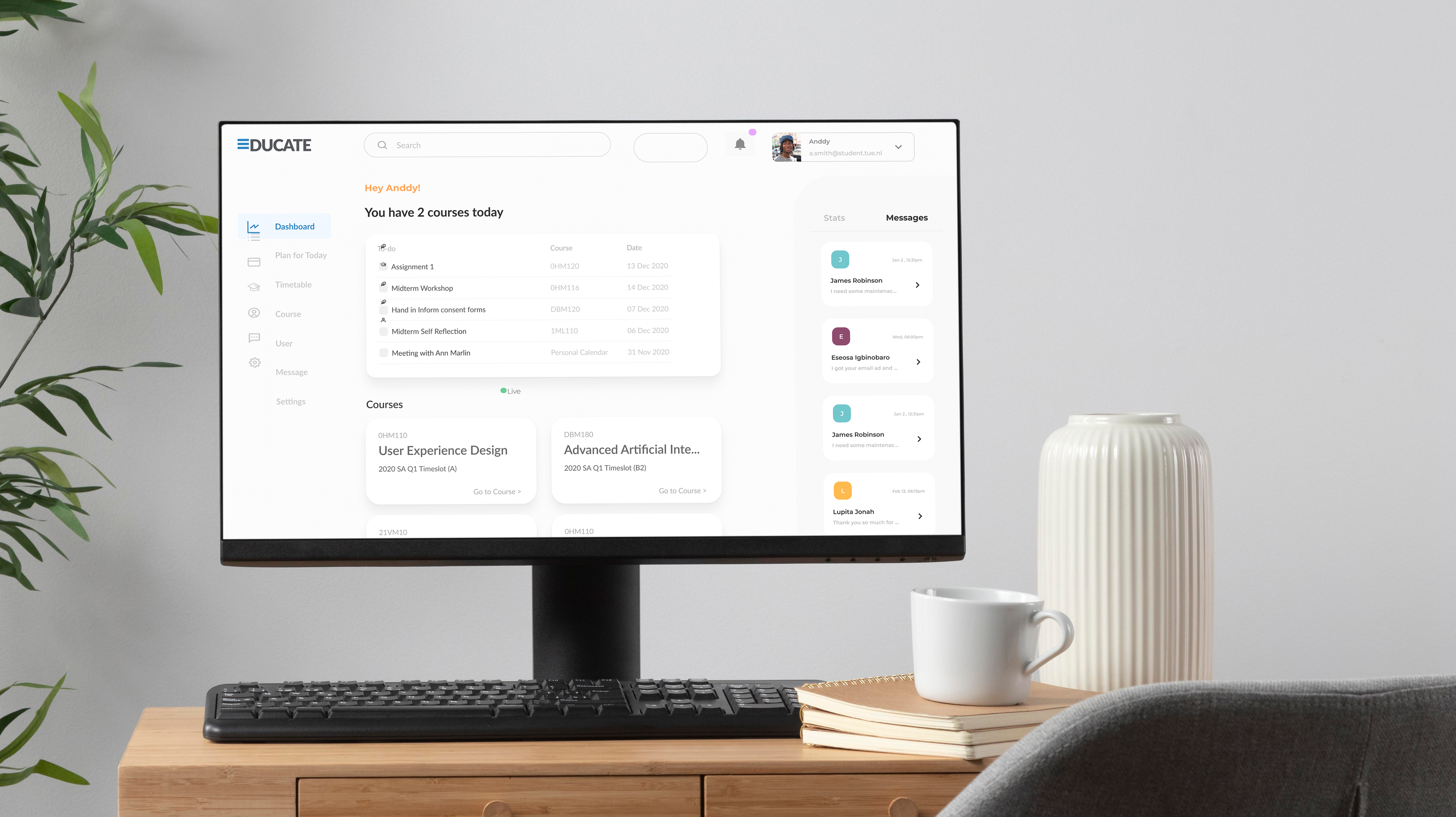
During the covid-19 epidemic, the way people live, learn and socialize has changed a lot. In this project our team, through interviews, concluded that the most urgent and valuable pain point to change is the decrease in motivation and efficiency of learning caused by students not adapting to online class habits. Based on this pain point, we designed the E-ducate online learning platform, which combines multiple forms of feedback to stimulate students' interest in learning and classroom integration.
User research and data analysis
To better understand the needs of users, we conducted eight semi-structure interviews. We found suitable users from the our social network who fit in the target group -- college students.The interviews were conducted on site, with the interviewer, recorder, and interviewee.
These questions focus on a broad scope to learn more about the whole life changes caused by covid-19. For example, where and how they lived during the lockdown. What activities they did before, during, and after covid situation.
we digged into the details that they mentioned, to find the underlying reason and need.
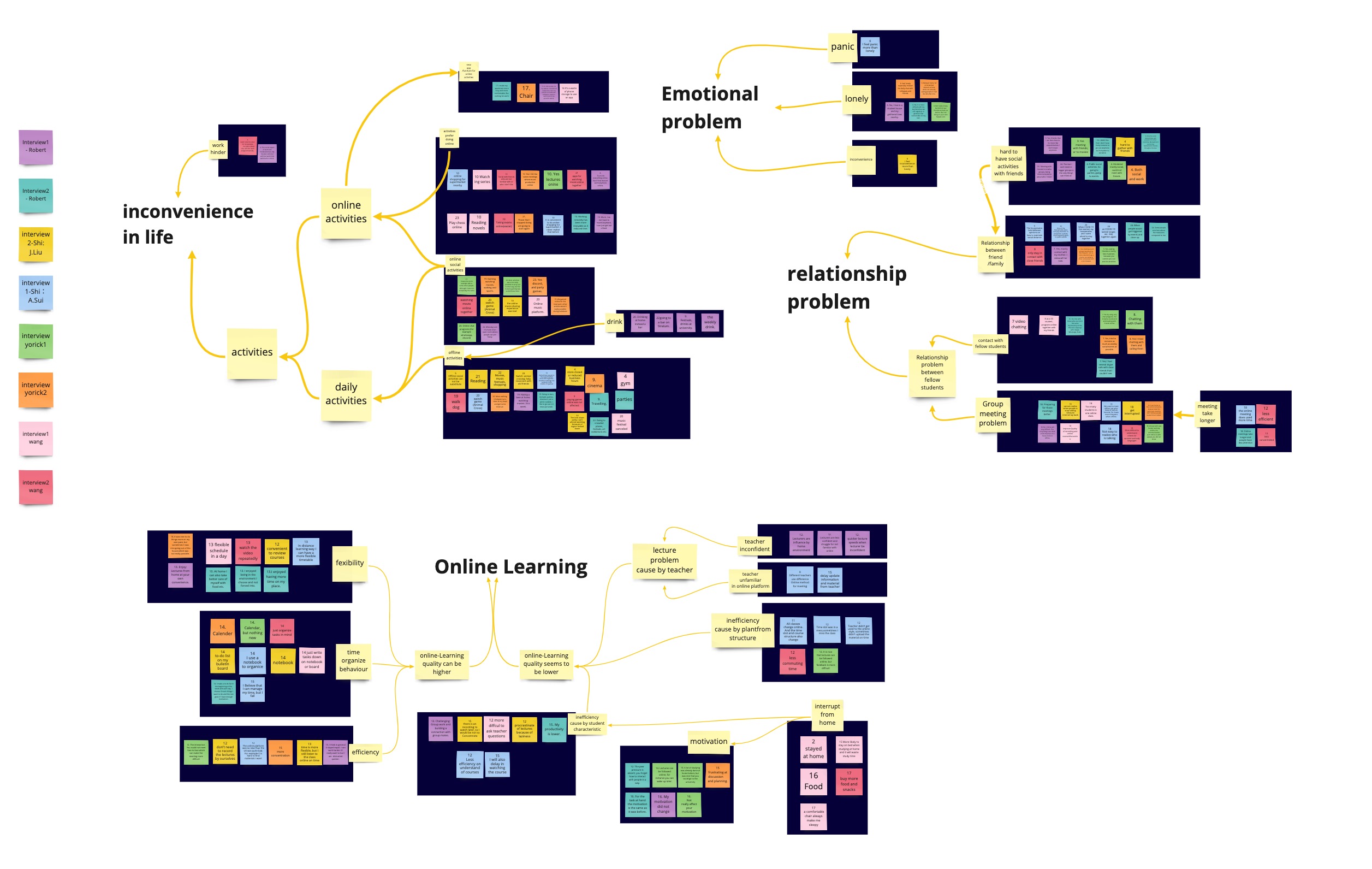
We fragmented and coded all the interview information to create an Affinity Diagram. We clustered their comments into themes and extracted user pain points from them.
After that, we defined and categorized the pain points according to "urgency" and "optimized value", and proceeded to design for the urgent and valuable pain points. Like the short-time lack of outdoor activitites is definitly not for big value as it could be easily solve when lock-down is over. However, online-study(hybird) is not the case. It is going to be a trend.
In the process of analyzing the interview data, we found that most of the users mentioned that COVID-19 had affected their learning. The sudden shift in learning style to online has severely weakened the face-to-face interaction experience in the traditional classroom. At the same time, the lack of "peer pressure" also makes students less effective.
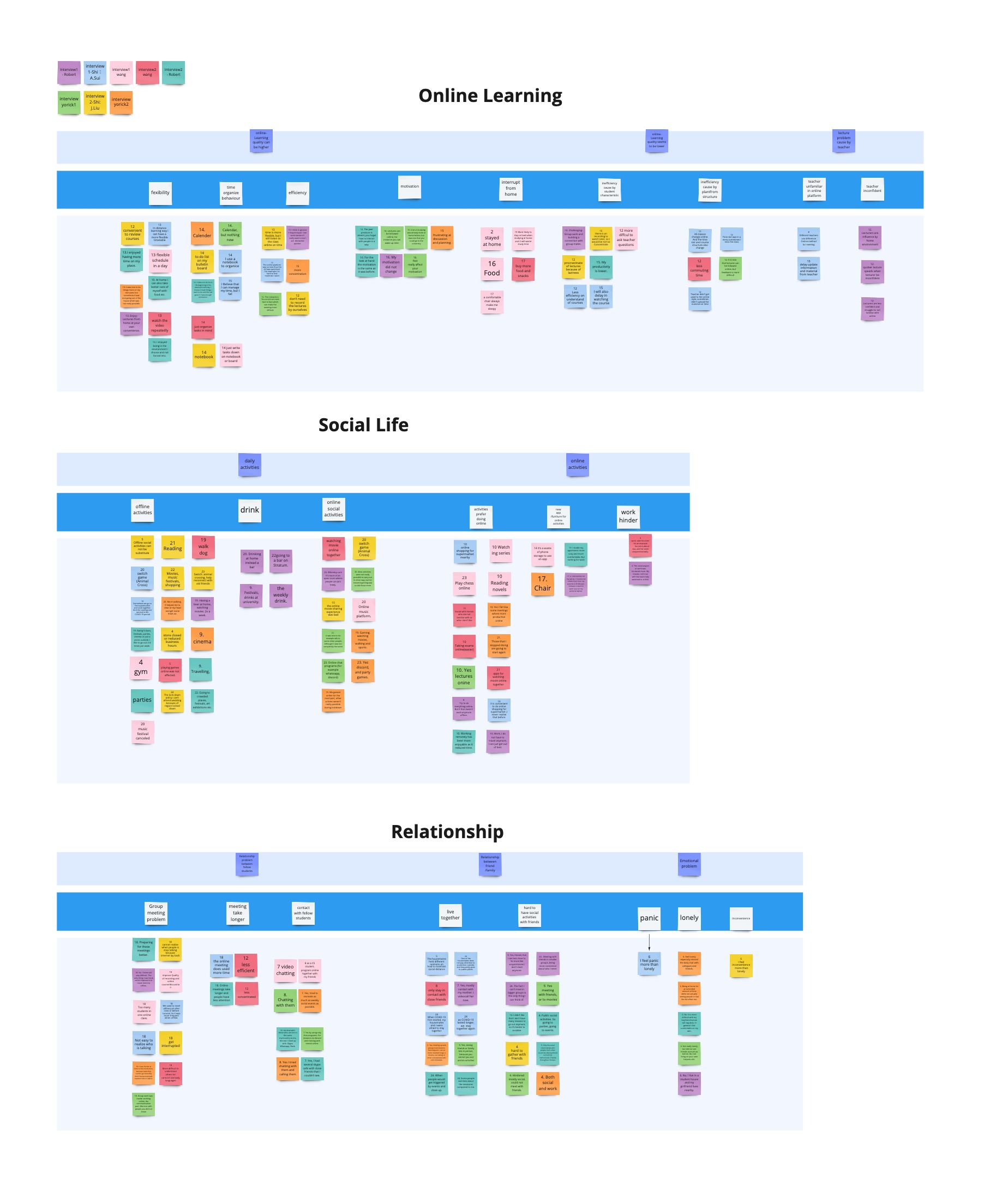
Affinity diagram
Design Concept
In the previous interviews, we extracted the core pain point: students have difficulty maintaining high learning efficiency during the transition to online education.
Accordingly, we used a opposite-thinking approach to brainstorming. Each team member wrote down several hypotheses about the issue at hand, trying to cover all aspects of the issue at hand, such as "students find it harder to concentrate in online classes than in live classes".
Then for all of these hypotheses, the group members wrote down the "opposite" of the hypothesis, such as "students think it is easier to concentrate in online classes". After each opposing opinion was written down, the panelists worked together to think about these new realities, how it affected this core pain point, and the resulting potential solutions.
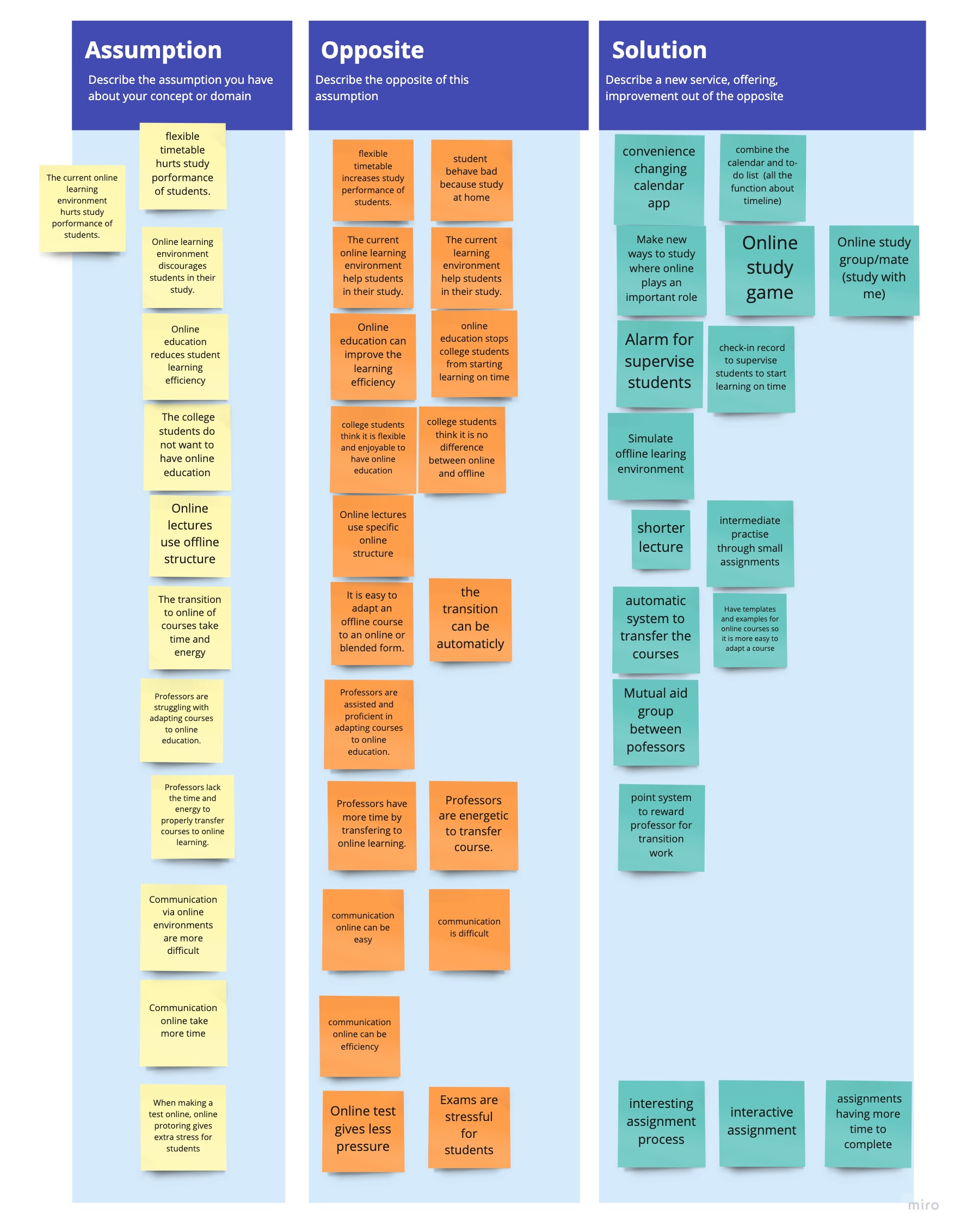
Opposite thinking
Based on the brainstorming, we designed a prototype to test the usability with eight target users. The process of user testing is as follows
1. Test introduction: We will introduce the purpose and scenario of using the current software. We also informed the test users that they needed to think out loud.
2. User tasks: They were asked to perform two tasks, "watch a specific course video" and "confirm completion of a learning task for today".
3. Feedback: Users were then asked to indicate their three favorite and least favorite feelings.
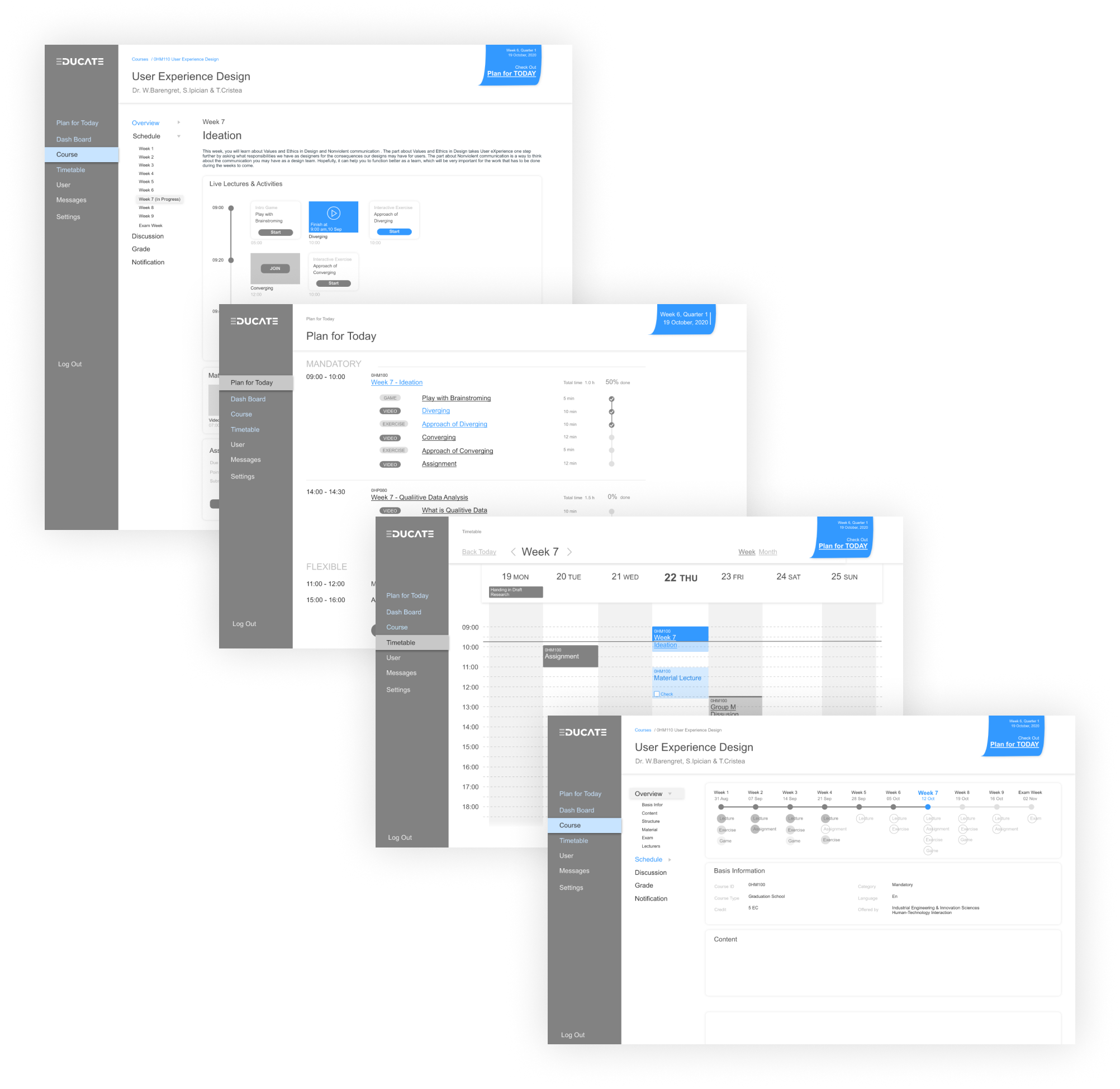
Interfaces used in uder testing
Through user testing, we have ranked the user feedback in order of frequency of mention. We also mark the pages where the problems occur. We will prioritize the high frequency issues and consider redesigning the pages with more problems.
Visual Design