Background
Duration
Location
Course
Group
SEP 2021
Eindhoven, the Netherlands
Designing with Advanced Artificial Intelligence
Course team of 4
Introdution
In the past decades, machine learning has become a promising technology in the design field, allowing even non-programmers to generate their own artificial intelligence algorithms after a small amount of learning.
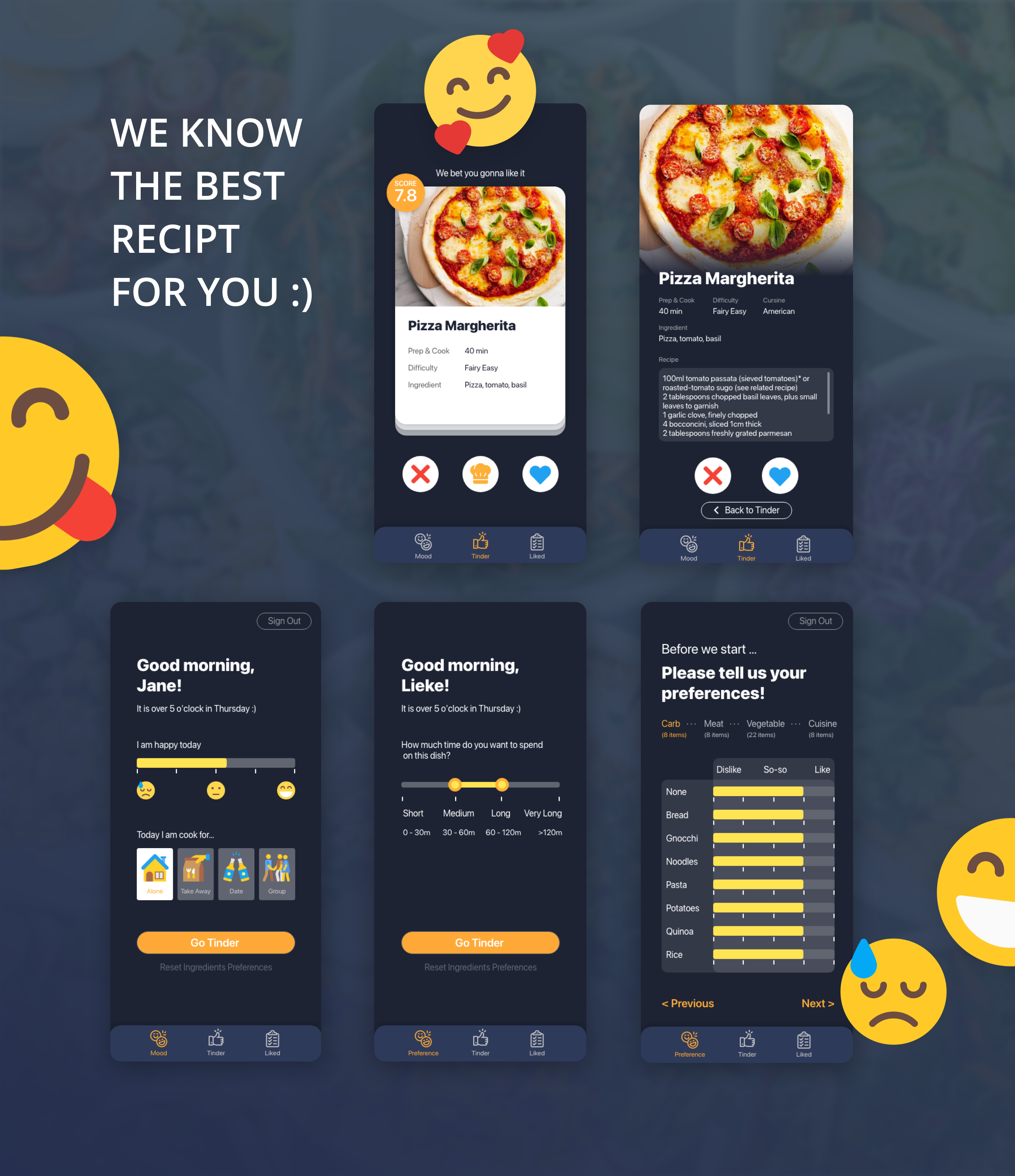
Food Tinder is a recipe recommendation application tailored for young people living alone. It adjusts the recommendation of dishes based on the user's personal information, just like a dating matching software.
Data Collection
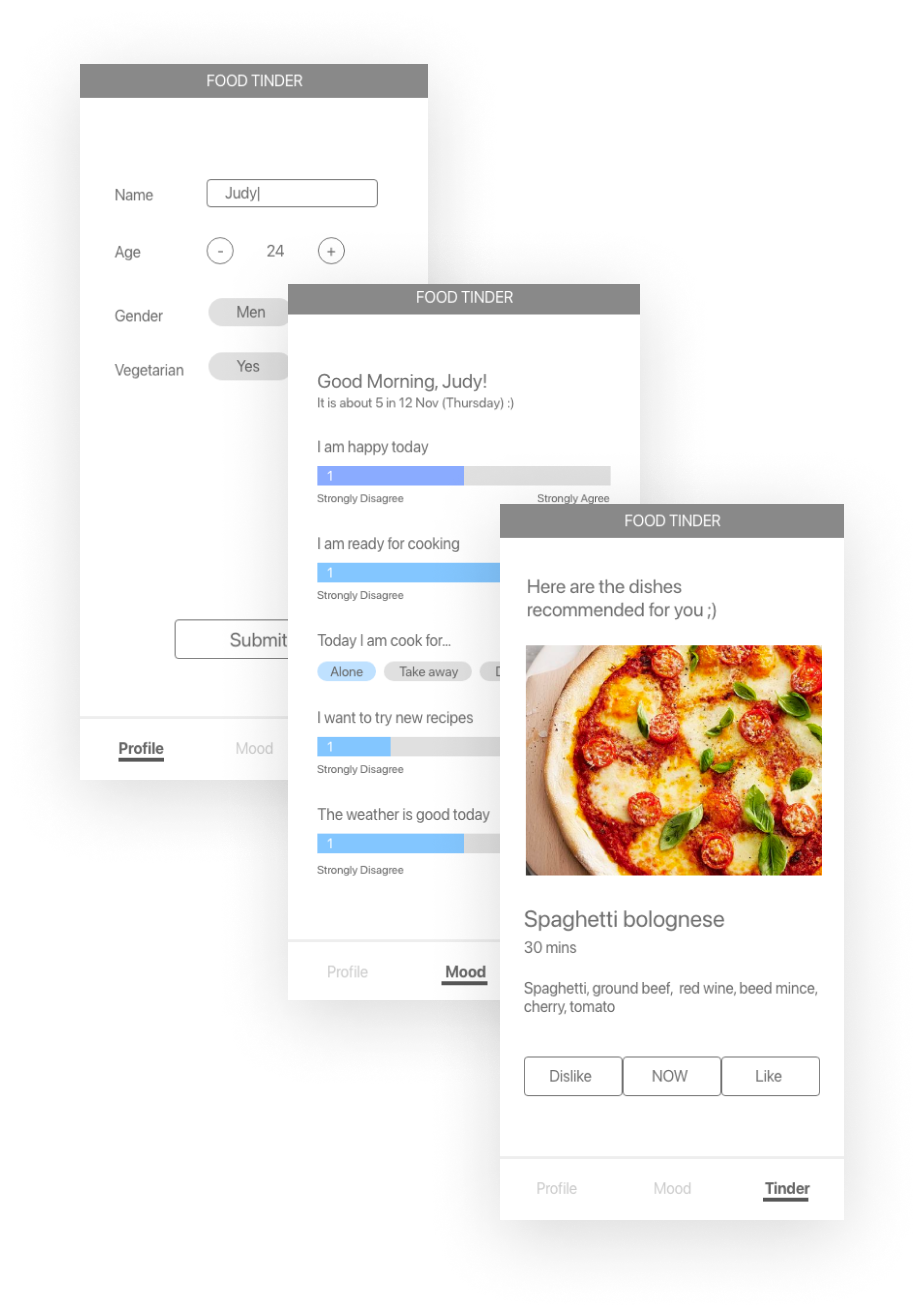
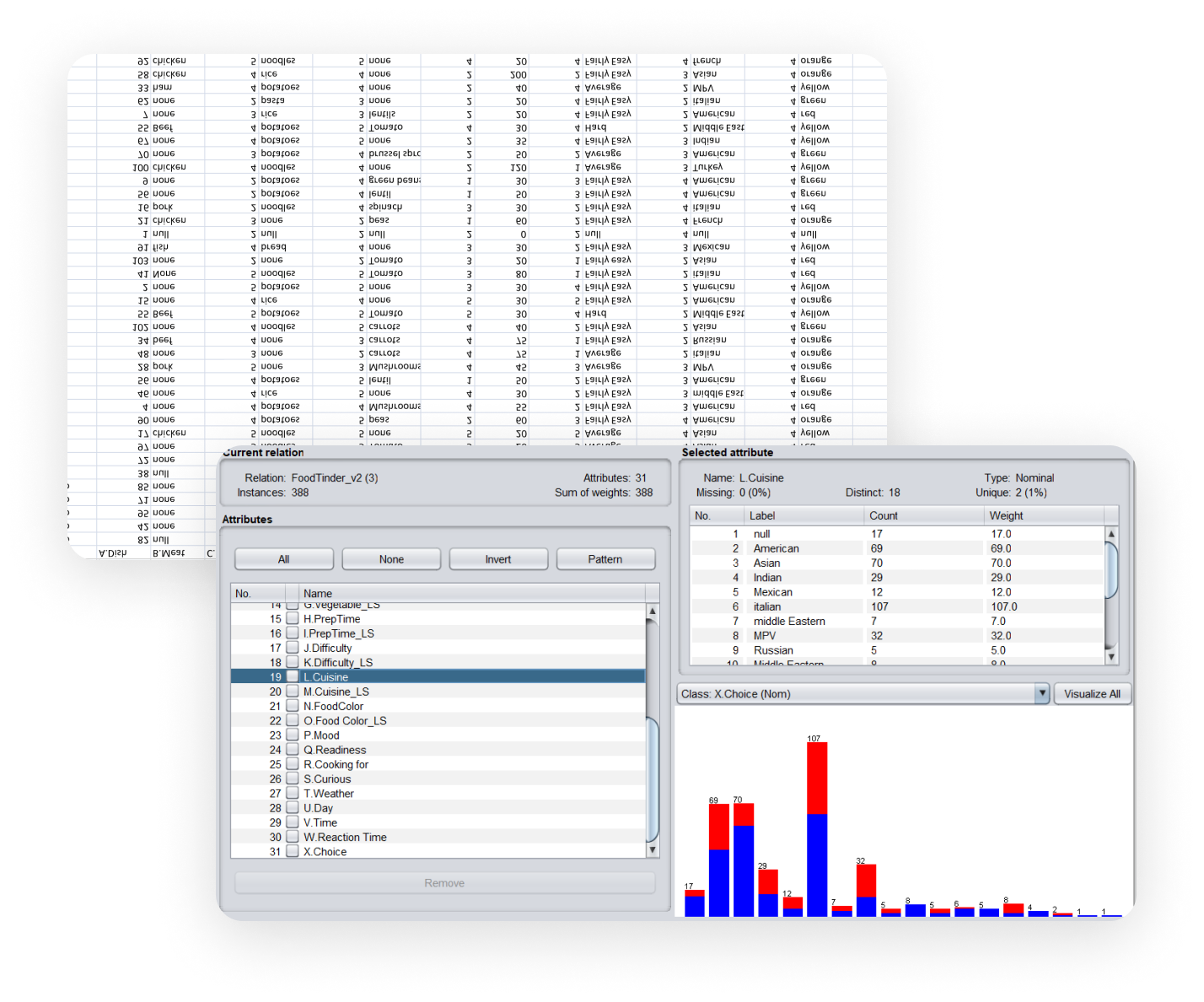
We designed an app to perform the initial data collection. This data will be used as learning material for the AI. The information collected included basic information about the user, mood of the day as well as needs, overall preferences for food, preferences for specific ingredients, etc. We recruited eight users for a data collection that lasted for one week and got 388 usable data.
Machine learning to predict user preferences
By learning from the 388 data, we generated different algorithms based on different models including regression model, decision tree model and k-nearest neighbors model. After fine-tuning the parameters and considering the user experience, we chose the regression model. The regression model can achieve more than 75% accuracy in determining the dichotomous choice of "like/dislike". Also, according to the regression model, we can easily get a user's likelihood of liking the current dish. This can be reflected as a "dish score" on the interface, giving the user a more detailed reference.
Bringing algorithms to the user interface
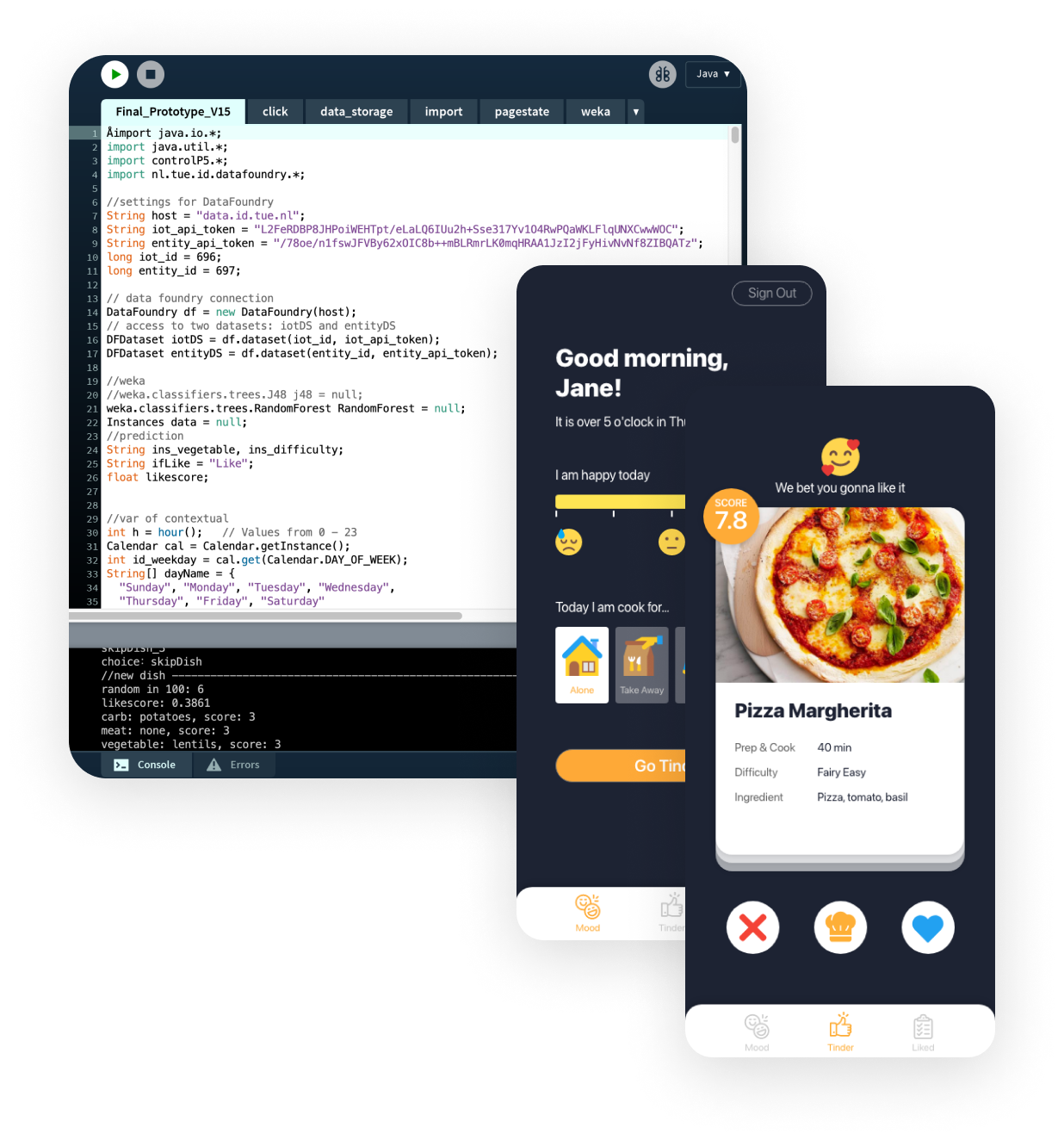
After introducing the algorithm into the program, the first step implemented is to intervene in the recommendation of the dish. The higher the prediction score, the higher the chance of recommending the dish to the user (50%-75%); on the contrary, the dish that the machine predicts the user will not like will be blocked by the algorithm with a 10% to 20% chance of recommending to the user. Meanwhile, for the sake of "AI transparency", we show the final judgment of the algorithm "like/fair/dislike" through emoji, and the prediction score given by the regression algorithm, so that users can understand how we recommend dishes according to the algorithm.
User interface